
“Jacob himself went on ahead of them,
bowing himself to the ground seven times,
until he came near his brother.”
–Genesis 33:3
A number of years ago, while still living in North Carolina, I was on my way to the Charlotte airport. I was heading to my sister’s home in Texarkana, Texas. She and her children were moving to our community and I was going out to help them get ready.
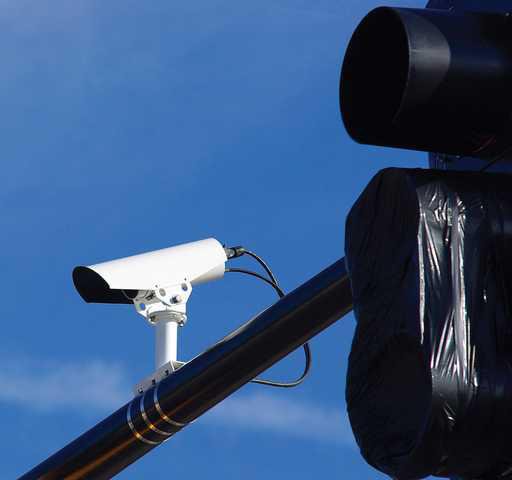
While driving along, I was thinking about the things we would need to do in Texas when I approached a busy intersection. As I neared it, the traffic signal turned yellow. I thought there was enough time to make it, but the light turned red just before I entered. In that split second of deciding whether to keep going or hit the brakes, I chose the former. As I proceeded through the intersection, I noticed a flash of light to my right. Only then did I recall how that intersection was one with cameras that took photos of any vehicle passing through when the light was red.
A few weeks later, I received a letter from the City of Charlotte with an aerial photo of my car in the intersection. It also had an enlarged image of my license plate along with the date and time of the violation. Lastly, it included a “request” for payment. I did so right away and a few months later in passing through the same intersection–solidly green this time–I noticed a new sign. It provided a running total of how many drivers had received a letter like mine. It was not a club I wanted to join!
On the day of my violation, I was not thinking about such impending notoriety, though. The flash did make me grateful that no one had been entering the intersection from the crossing street. It also made me wonder what that poor driving decision would mean for my auto insurance rate. While clearly in the wrong for not stopping, I also began to think about how that goodwill mission to my sister’s home had begun badly. And in an instant of feeling sorry for myself, I recalled the old expression that suggests “no good deed goes unpunished.”
As an aside, it occurs to me that this is my blog’s second story in a month about receiving a ticket when behind the wheel. While considering myself a safe driver, I would understand if any readers who live in my community decide right now that they will decline if I ever offer them a ride! Still, this second incident does provide a context for the character trait that is our focus this week–taking responsibility–even when doing so reluctantly.
The Biblical story of Jacob’s impending reunion with his brother lifts up that theme. Jacob is the one who, years earlier, had convinced his older sibling Esau to trade the birthright for a bowl of stew. Later, while in cahoots with his mother, Jacob tricked their father Isaac into giving him the blessing that was intended for the eldest son as well. When Esau entered the room soon thereafter with the meal he had prepared for Isaac and learned what had just happened, he was furious and vowed to kill Jacob. Their mother overheard the plot and Jacob fled for his life.
In the years apart, Jacob became the victim of his uncle’s trickery multiple times, experiencing first-hand what he had done to Esau. Yet one day God urged him to return home, meaning Jacob would have to face his brother again. Genesis 32 and 33 tell of that story as Jacob sends messengers to Esau announcing that he wants to be reconciled. Word comes back that Esau is heading their way with 400 men. Fearing the worst, Jacob divides his traveling party into two so that at least half of them will survive. He prays for deliverance but also sends a huge gift of animals to appease what he anticipates to be a vengeful brother. Finally, Jacob sends his wives and children ahead while he stays behind. It is not the depiction of one who is taking responsibility for his trickery from the past. Yet while alone during the night that follows, he experiences a great wrestling match with God or an angel that leaves Jacob with a limp.
The next morning, Jacob sees Esau and the 400 men drawing near. He lines up his wives and children in order of favoritism, still expecting retribution. Yet something has changed in the man as the narrative makes clear. “Jacob himself went on ahead of them,” we read, “bowing himself to the ground seven times, until he came near his brother.” Jacob is ready to accept whatever outcome Esau chooses as he models submission and humility toward his sibling. And the end result? One of the great reunions in Scripture occurs as Esau runs to his brother. They hug and kiss and weep as the breach has been closed. God certainly urged the return. Esau showed incredible grace in that moment as well. Yet it only occurred because Jacob took responsibility for what he had done years before.
In all kinds of settings, children and adults can struggle to follow that path. Instead, excuses can be offered for our mis-deeds or blame directed toward others. Rationales can be generated or attempts to lessen the significance of our inappropriate deeds or failure to act. Some of those steps might be warranted as emotions cool. Yet until we take appropriate responsibility for what we have done or omitted, true peace will be absent.
To be sure, it doesn’t always turn out as well as that day long ago when an aggrieved older brother welcomed his sibling home. Yet even the possibility of such an outcome is unlikely without taking responsibility. Thus I ask: “Is someone waiting for that kind of response from you?”
Strength of My Heart, help me look with honesty at deeds for which you would have me take responsibility. Then, guide me to begin, trusting once again, that you go before me. Amen.
4 responses to “When the Light Turns Red”
Beautiful John. We all can likely remember occasions when a humble apology and acceptance of a bad decision would have been the best – rather than allow time to pass (hoping “ it would blow over”). Elaine
I know I can certainly think of times like that, Elaine. Thanks for the insight!
As I read this blog, I have to ask myself why is it that there’s always a bevy of excuses to throw out there to justify a wrong in lieu of simply taking responsibility? Looking back over those times that I chose the excuses, I felt that it was much easier than facing the consequences. However, I also found that carrying the weight of the wrongdoing took its toll. When it came time for taking responsibility, it was a great relief that on most of the occasions the recipients were like Esau, and I could have avoided all the angst!!
A wonderful self-reflection, Alice. thank you!