
“My God, my God, why have you forsaken me?”
–Mark 15:34
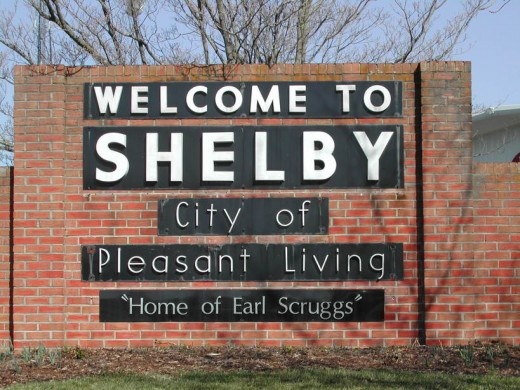
Years ago, my job with the Southern Bell Telephone Company moved me to Shelby, North Carolina. On learning of that transfer, I began searching for an apartment and soon discovered that one man owned most of the available units in town. I found one I liked, but since I already had a refrigerator, told the woman writing up the lease that I wouldn’t need the one that came with the apartment. She agreed to have it taken out, but neither of us made notation of its removal on the document.
The refrigerator was gone before my arrival, but that was the last pleasant contact I had with the landlord. Over the next year, he consistently promised to repair things or trim back bushes, but rarely followed through. So, at the end of the eleventh month of my lease, when I returned home from work and found a note revealing that my new rent would be $45 a month higher to cover, in his words “increased maintenance costs,” I knew it was time to go.
I found an apartment owned by someone else and made the move. A couple of months later, I received a letter from my former landlord that on inspecting the apartment they noticed the refrigerator was missing. It further stated that if I didn’t provide the appliance by a certain date their lawyer would be in touch. My first reaction was to laugh thinking it only fitting that it took them two months to notice its absence, but then realized I had no proof it had been taken out before I moved in. While wondering if I would literally pay for that mistake, I thought of an attorney from my church. We served as youth advisors together and was a great guy.
The next day, I called him at work and began to describe the situation. He had an unusually formal tone, but didn’t think anything of it until he stopped me with the words “Mr. Willingham, I represent your landlord.” Only then did I consider how he and my ex-landlord had the same last name. Ultimately, the situation was resolved as the woman who had written up the lease remembered our conversation from a year earlier and helped locate the refrigerator in their warehouse. Yet I didn’t know that would be the outcome when my conversation with the attorney ended. Nearly 50 years later, I still remember the sense of isolation as I hung up.
Many of us have known that sensation. We can feel alone in a busy school cafeteria when classmates at the next table begin to whisper and look in our direction. We can feel that way in a doctor’s office, too, when receiving disappointing test results or when we arrive at a hotel late at night and learn that they don’t have our reservation and the place is now completely booked. A feeling of isolation can come in all kinds of moments as the verse we just read makes clear.
The Gospel of Mark records only one statement from Jesus on the cross. After six agonizing hours on the cross Jesus cries out “My God, my God, why have you forsaken me?” Some scholars have tried to soften the words by noting the Psalm Jesus is citing begins with a sense of forsakenness, but ends in confidence. “Future generations will be told about the Lord,” David said in Psalm 22 “and proclaim his deliverance to a people yet unborn, saying that he has done it.” That conclusion has left some to argue that Jesus didn’t really feel forsaken, but only had energy enough to cite the opening line; that had he not been exhausted by the trauma he would have added those final words of trust, too.
I don’t pretend to have answers for those questions or claim to know Jesus’ intent, but his cry as presented in our text is so honest and human. It sounds to me like one who felt real anguish as he neared his death; one who perhaps hoped God would rescue him at the last minute and when it did not happen felt forsaken. I’m glad Mark shared that parting word from Jesus as it allows us to connect our own times of hardship to our understanding of God’s abiding presence.
For even though I believe God’s son felt forsaken on the cross, he was not alone. Neither are we, not ever. And for that gift and the way Jesus voiced his anguish as death neared, we can listen in with humble and grateful hearts.
Ever-present one, thank you for the words your son spoke on the cross. Help me to remember that even in those times when I feel the most alone, you are still there. Amen.
2 responses to “Forsaken, But Not Alone”
I totally understand the feeling of loneliness. Great support thoughts!
Thanks, Jeanne. I hope you and yours have a meaningful Holy Week!