
“See, the home of God is among mortals.
He will dwell with them.”
Revelation 21:3a
The Biblical verse above comes from a passage when John tells of seeing a “new heaven and a new earth.” Those words from Revelation are often read at funerals for in such times we need to be reminded of a day God “will wipe away every tear,” when “death will be no more,” a time with no “mourning and crying and pain.” It’s a beautiful image of a moment when all of life’s difficulties will end, something that will only occur when Christ returns.
Still, just prior to that description, John tells of another way that the future will be different from the present one as he hears a voice that says “See, the home of God is among mortals. He will dwell with them as their God; and they will be his people, and God himself will be with them.” In essence, that voice speaks of a day when God will become our neighbor. John says it will happen at the end of time. What would it mean if God moved next door today?
Certainly, having God in the neighborhood would change a frequent topic of small talk. Comments about snow totals would take on a different flavor were we to live across the hall or down the street from the one responsible for all creation. Yet beyond conversation about the weather, what would it be like if God were our neighbor now?
Would it change the words we used around our home or the way we spent our money? The idea of keeping up with the neighbors would take on a different meaning if we lived down the street from the source of every blessing. Likewise, I’m guessing there wouldn’t be as much yelling in the apartment if we knew God lived just on the other side of a shared wall.
If God were our neighbor, would that presence change our perspective on issues in our community or nation? Would our online postings take on a different tone? Would having the ability to see God before we went to the polling booth change the decisions we made once the curtain closed and began to cast our vote? I suspect it would. Clearly, though, this world does not represent that kind of divine residence now.
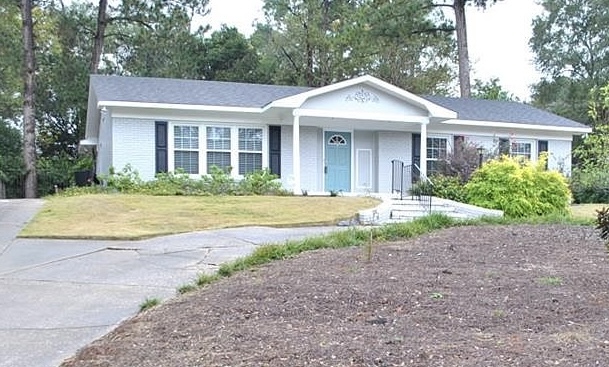
When I was in high school, I lived in a neighborhood that had only white residents. It was not an exclusive neighborhood if we want to use that term economically as the homes were all rather modest and there was no gate at the entrance. Still, in that development of probably 300 houses every person was white.
During my sophomore year, a black family moved in across the street from our home. The father was retired military and had a good job in town. They kept up the yard and their pets didn’t roam the street. They were friendly when we saw them and their home was immaculate. In every way imaginable, they were good neighbors.
Even so, trouble began. It started with threatening phone calls and trash cans overturned in their yard. Obscene messages were burned into their grass and one night, someone threw a brick through a plate glass window facing the street. A short time later, the family left.
I look back on those events with a sense of personal shame. Not because I was the one causing the problem, for I wasn’t, but because I knew who had carried out those crimes.
They were classmates. I heard them bragging about it at school, telling how they had forced that family to move. Still, I never told anyone what I had heard—not my teachers or mother or siblings. I never went to our principal to share what I had learned either. If asked at the time, those adolescent terrorists would have said that our neighborhood was ruined when one family moved in, yet from my perspective it declined appreciably when they left. When, for their own safety, they concluded they had to leave, simply because of the color of their skin.
It won’t be that way when God moves into the neighborhood. When God takes up residence in our apartment complex there will be an end to tears and death and pain. When God moves onto our street, there will be an end to hatred and fear, to keeping up with the Jones and gossiping about the Smiths. When God moves in, there will be an end to occasions when persons can hope God is only looking when they are proud of their choices; when persons expect God to bless their prejudices and questionable deeds.
Our neighborhood will change forever when God moves in, yet that kind of life can begin even now. For long before the end of time, we can make changes on our street and dorm floor, in our apartment building and our house. We can decide right now to live differently because we have committed ourselves to reflecting the love of One who has given us life. The One who even now is looking for us to transform the places we live, so that it might become the sort of neighborhood where even God would want to dwell.
Forgive me, Lord, for the times when I am not a good neighbor and wait for others to bring about needed change. Help me instead to be the kind of person you would want living next door. Amen.
Leave a Reply